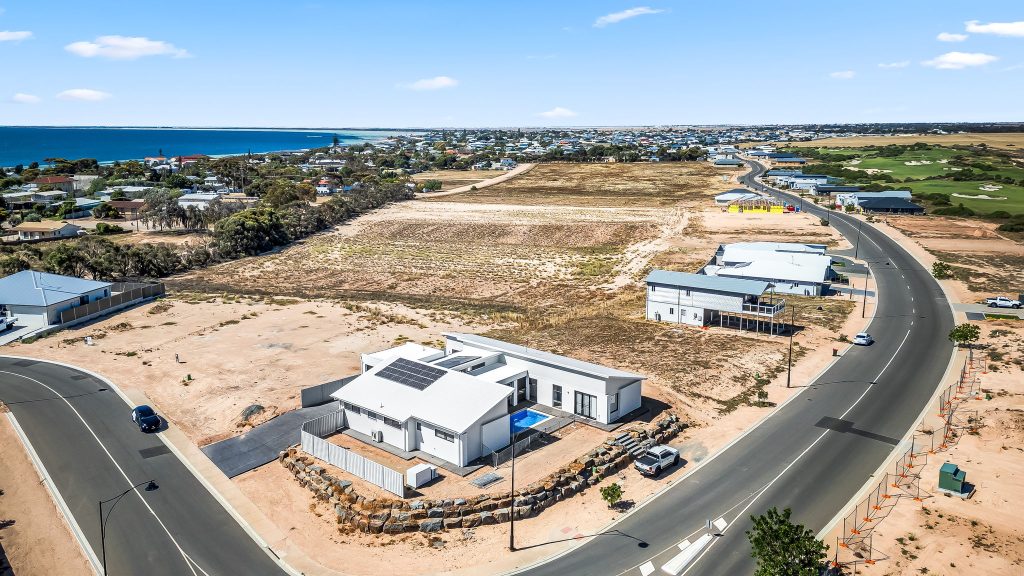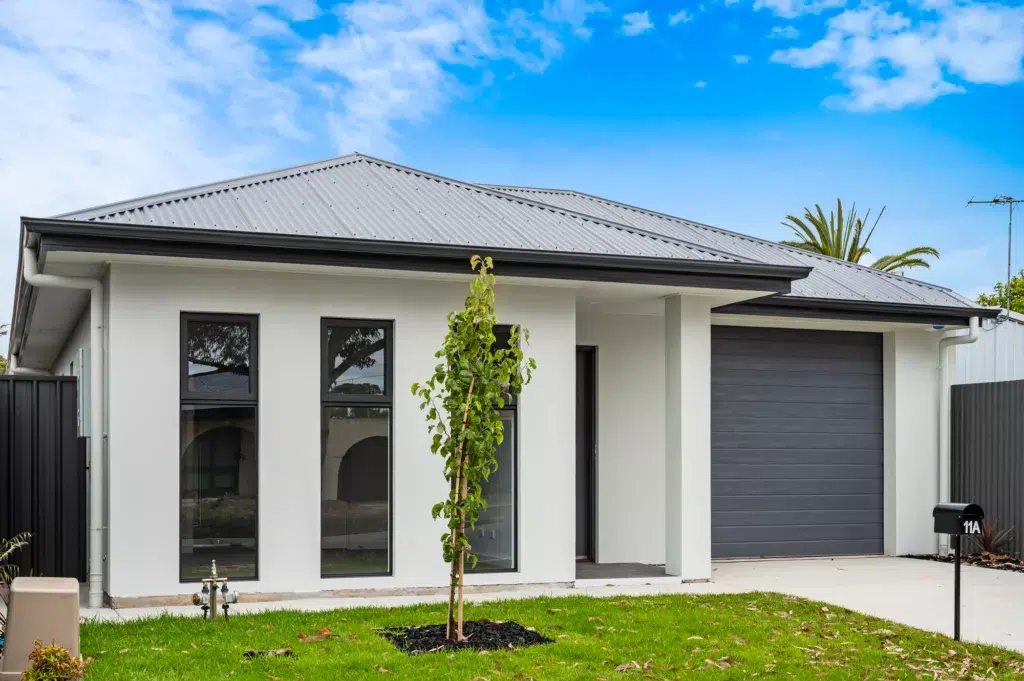
Sloping land can produce some of the most compelling homes in South Australia — homes that feel embedded into the terrain, capture light in ways flat sites can’t, and make the most of views, breezes and elevation. But sloping blocks aren’t simple. The ground conditions are less predictable, the engineering is more involved, and the construction sequence changes entirely.
This guide steps through the technical considerations that architects and builders need to work through when designing and constructing a sloping-block home in South Australia. If you’re planning a custom build, understanding the process early helps you avoid unnecessary excavation, cost surprises and over-engineered solutions.
Urban3 builds architect-designed homes across metro and regional SA, including steep and complex sites. What follows is an outline of the real-world factors we see every day — and the key points to explore with your architect during concept development.
Understanding the Slope: How Landform Shapes the Entire Build
Sloping sites fall into a few common patterns. Each pattern influences the structure, engineering, drainage and layout in different ways.
Front-to-rear fall
The land rises or falls as you move from the street to the rear of the block. This affects driveway gradients, garage positioning, and whether floors step up or down.
Side-to-side fall
The slope runs across the block. This usually requires stepped footings, variations in wall height, and thoughtful retaining strategies to avoid unnecessary excavation.
Cross-fall or compound slope
A combination of both directions. These sites require more detailed surveying and careful coordination between architecture, engineering and excavation sequencing.
Steep fall zones
Some SA sites have sections with gentle grades transitioning into steep segments. These need hybrid structural systems and detailed drainage design.
Understanding the slope type isn’t cosmetic — it determines everything from your floor levels to your stormwater strategy.
Urban3 recommends confirming with your architect whether the proposed design uses the natural fall to its advantage, rather than relying on broad cut-and-fill to force the land flat.
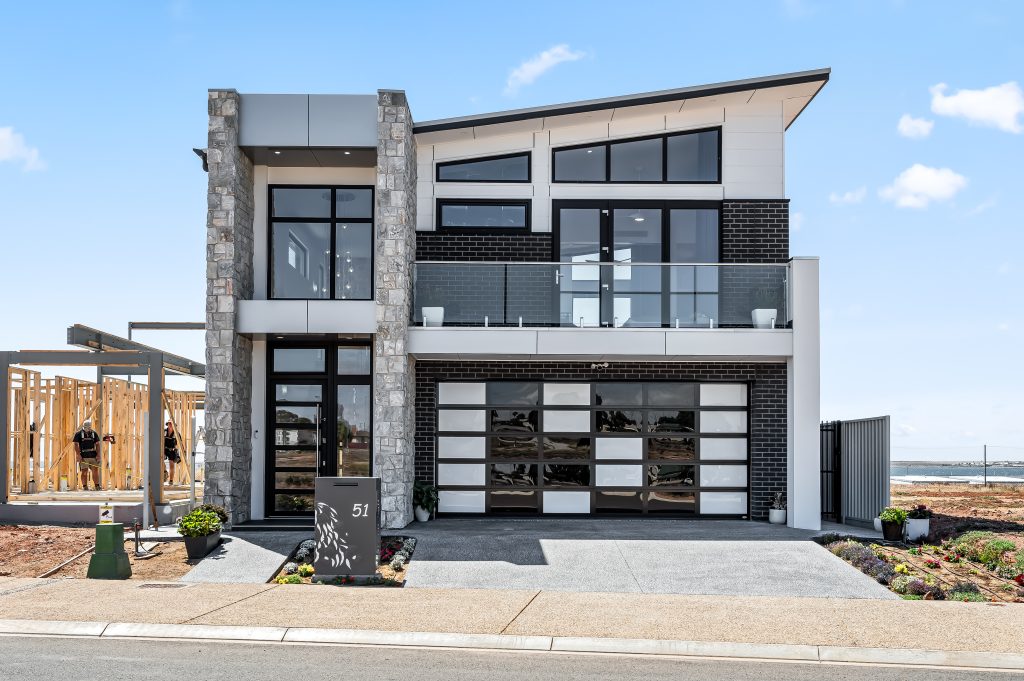
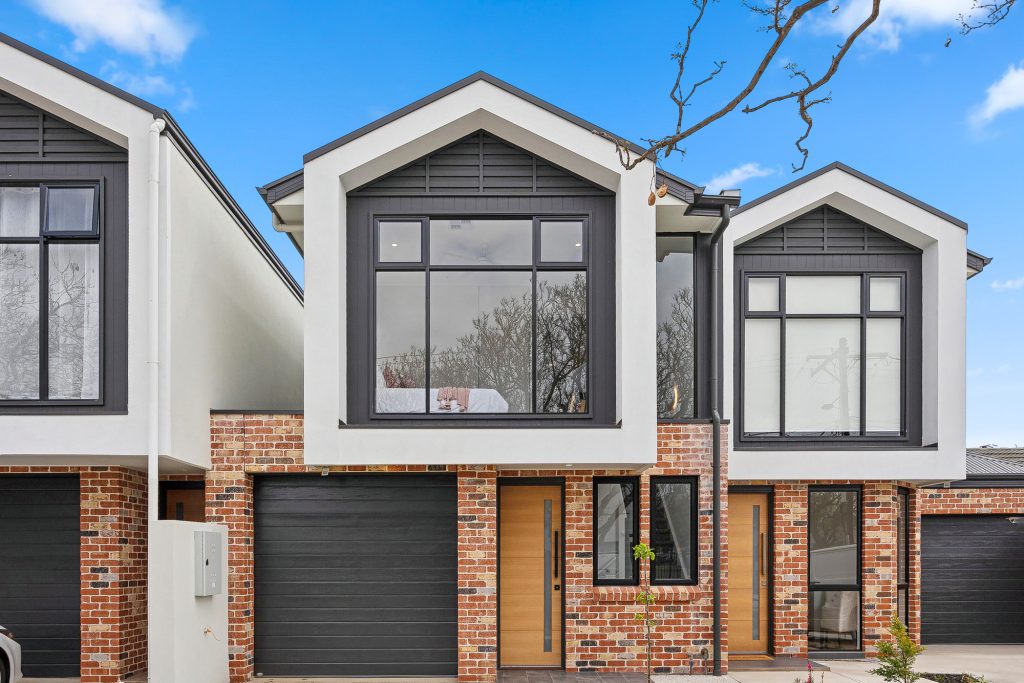
How Soil Conditions Influence Engineering on Sloping Sites
Soil type matters more on sloping land than almost anywhere else.
Across South Australia, the most common conditions include:
- Reactive clay (H1, H2 and E classes)
- Fractured rock, especially across the foothills, Fleurieu and Barossa escarpments
- Shallow soils overlaying rock
- Loose fill from previous subdivision works
Each behaves differently when excavated or loaded.
Reactive clay on a slope
Clay shrinks and swells with moisture. On sloping blocks, this movement is uneven, which influences:
- footing depth
- slab reinforcement
- pier requirements
- retaining wall design
- drainage positioning
Fractured rock
Rock can be an asset or a problem.
It offers natural stability but can increase excavation costs dramatically if not planned for in the design stage.
Urban3 suggests asking your architect to confirm whether the geotechnical report has been incorporated into the floor-level strategy and whether suspended or stepped slabs may reduce excavation.
Design Approaches for Sloping Blocks: Choosing the Right Structural Strategy
There isn’t one “right” way to build on a slope. The solution depends on slope, soil, access and architectural intent.
Here are the common approaches used in SA.
1. Stepped Slab Construction
Different levels of the home sit at different heights, following the natural fall.
Advantages:
- reduces excavation
- lower retaining walls
- keeps the home anchored to the landscape
- more cost-effective than deep cuts
2. Split-Level Design
Often used for steeper gradients.
Key benefits:
- natural separation of living zones
- improved daylight penetration
- avoids large, monolithic retaining walls
Urban3 recommends discussing with your architect how a split-level strategy might improve natural ventilation and reduce excavation volume.
3. Suspended Slab or Raised Construction
Used when soil movement, rock or drainage make cut-and-fill impractical.
Supports can include:
- steel sub-structures
- concrete piers
- hybrid slab systems
This is common on coastal escarpments or steep regional sites.
4. Hybrid Systems
Many SA sites use a combination — stepped slabs in some areas, suspended elements in others.
This allows the architectural design to maintain clean floor transitions while respecting the landform.
Managing Water on a Slope: Drainage and Waterproofing Done Properly
If there’s one element that cannot be compromised, it’s drainage.
Water behaves differently on a slope, and poor drainage leads to long-term structural issues.
Essential drainage principles for sloping sites
- Water must always be directed away from structures.
- Retaining walls require engineered drainage zones, not ad-hoc gravel.
- Subsoil drainage on the high side protects footings from moisture pressure.
- Stormwater systems need controlled, compliant discharge routes.
- Waterproofing membranes require protection during backfill.
Urban3 recommends confirming with your architect and engineers that the stormwater plan reflects the actual ground profile rather than a simplified contour assumption.
Retaining Walls: Integration Early Saves Cost Later
Retaining walls on sloping sites are not a minor detail — they are structural elements.
They must be engineered, documented, and sequenced correctly.
Key considerations:
- Height impacts engineering and cost
- Proximity to boundaries affects approvals
- Backfill and drainage must be detailed
- Retaining should be built in the correct order to maintain site access
- Materials (concrete, masonry, reinforced sleeper systems, etc.) behave differently under load
Urban3 suggests asking your architect to integrate retaining into the first pass of the design, rather than treating it as a post-design addition.
Access and Build Sequencing on Sloping Blocks
Steeper sites limit where vehicles, cranes and excavation equipment can operate.
This changes the sequence of the build.
Common access considerations in SA:
- narrow hills roads
- limited parking
- crane placement restrictions
- steep driveways requiring temporary stabilisation
- spoil removal logistics
- wet-weather access during winter
An experienced builder will plan these early so temporary works and delays don’t creep into the budget later.
Cost Drivers Specific to Sloping Blocks
Sloping-site builds are more complex than flat blocks, but the cost drivers are understandable once the site is assessed.
Key contributors include:
1. Engineering and structural requirements
More complex footings, piers, beams, or slab systems usually add cost.
2. Excavation and rock management
Rock hammering, drilling, export, and access planning make up a significant portion of variability.
3. Retaining systems
These can be extensive depending on boundary heights and design intent.
4. Drainage
Subsoil drainage, stormwater routing and waterproofing are critical.
5. Access labour
Steep or tight sites take longer to manoeuvre materials and machinery.
6. Design choices
Urban3 recommends confirming with your architect whether stepped floor levels or hybrid slab systems could simplify the structure and reduce excavation.
Typical cost uplift
A sloping site can add 15–30% compared to a similar home on a flat block, depending on gradient, soil and engineering.
How to Work With Your Architect on a Sloping-Block Home
Your architectural design is the single biggest factor affecting cost, structure and buildability.
Here are key conversations to have early.
Ask your architect to explore multiple level strategies
One scheme may rely heavily on excavation, while another uses stepped floors with minimal cuts. A third option might employ suspended construction.
Each has different cost and complexity impacts.
Confirm how the design handles water
Drainage should be integrated into the design, not drawn in later.
Review the geotechnical report together
This determines whether the foundations are over rock, clay or mixed soil.
Check that retaining is part of the architectural thinking
Not an afterthought.
Understand access impacts
Garage location, driveway gradient, crane setup and soil removal all affect the build.
Urban3 can review the design with you and provide buildability advice before documentation advances too far.
The Construction Sequence on a Sloping Block: What Actually Happens
Here’s the typical flow for a sloping-site build in South Australia:
- Detailed survey and geotechnical testing
- Architectural concept aligned with slope
- Urban3 feasibility review
- Engineering and stormwater design
- Access and temporary works planning
- Excavation and benching
- Retaining walls constructed in sequence
- Footings, piers, beams and slab installation
- Framing across stepped or suspended levels
- Roof structure and cladding
- Internal fit-out continues as normal
- Final external works, drainage and earth shaping
The difference from flat-site construction is the level of coordination required in the early stages. Once the structure is up, the remainder of the build proceeds normally.
Is a Sloping Block Worth the Extra Effort?
For many homeowners, yes.
Sloping blocks offer:
- better daylight
- natural ventilation
- privacy
- framed views
- architectural interest
- stronger resale value in many SA markets
The additional work at the start of the project often produces a home with far more character than a flat-site build.
How Urban3 Supports Sloping-Site Projects in South Australia
Urban3 builds architect-designed homes on all types of sloping land — metro, foothills, coastal, regional and rural. Our role is to make the build predictable, controlled and well-sequenced.
Feasibility and buildability insight
Urban3 reviews early architectural concepts to highlight structural, retaining, access and cost considerations before the design is locked in.
Coordination with your architect and engineers
We work closely with your chosen architect’s engineering partners to ensure the structural and stormwater solutions align with the design intent.
Transparent costing and site-specific allowances
Slopes can create cost variables. Urban3 provides clear breakdowns and realistic allowances so clients understand where the money goes.
Experienced management of sloping-site construction
We handle complex excavation, staged retaining, suspended structures, and tricky access. Careful planning prevents delays and cost escalation.
If you’re planning a custom home on a sloping block anywhere in South Australia, the best next step is an early feasibility discussion. It gives you clarity long before drawings reach final documentation — and that clarity is what keeps sloping-site projects on track.